

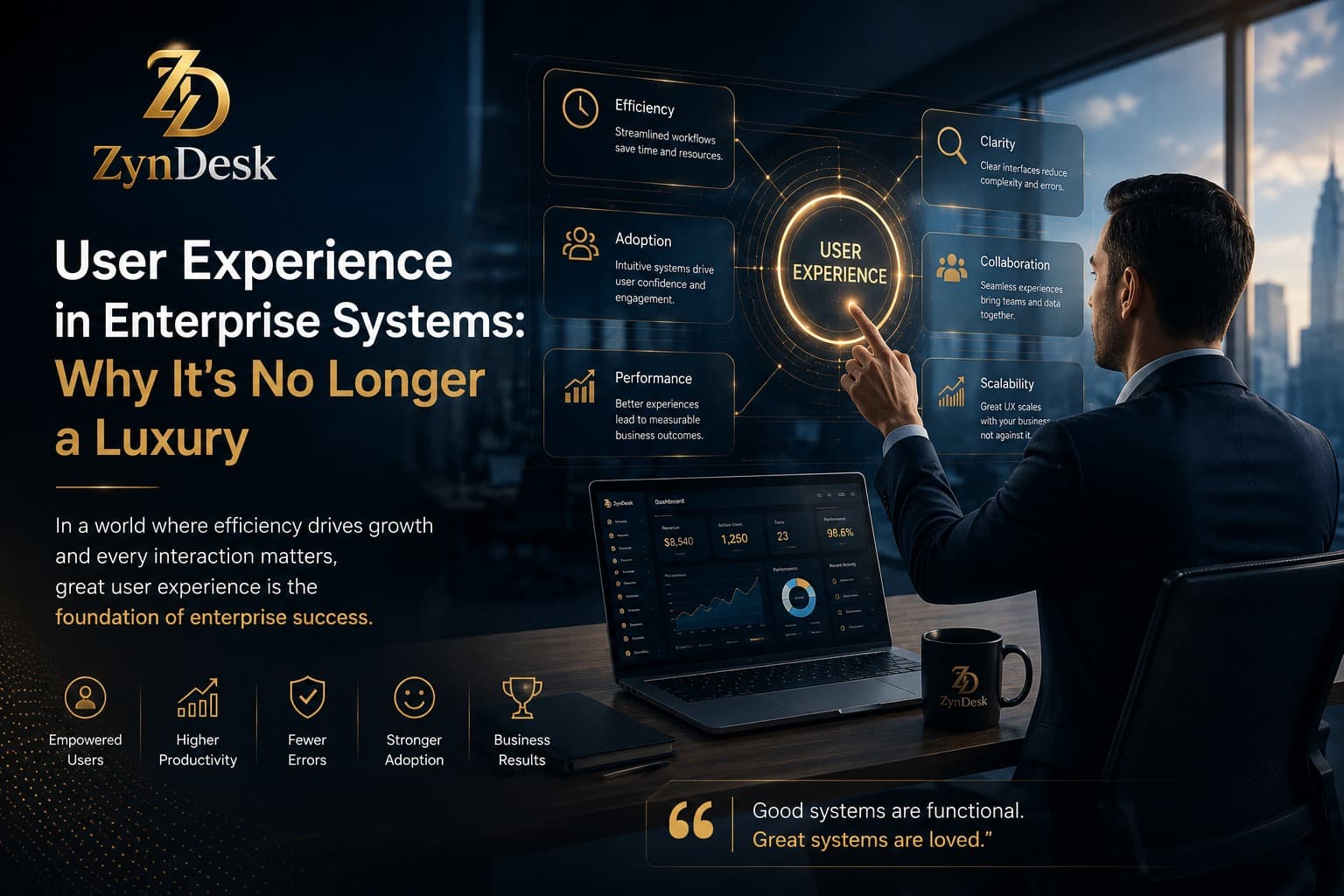
User Experience in Enterprise Systems: Why It's No Longer a Luxury
User Experience in Enterprise Systems: Why It's No Longer a Luxury
When the System Becomes an Obstacle Instead of a Solution...
Imagine an employee starting their day facing dozens of tasks that must be completed before the shift ends. They open the enterprise system the company relies on to manage its operations, then begin searching for the right screen, navigating between numerous windows, and clicking through dozens of buttons just to carry out a simple action that should have taken no more than a minute.
Five minutes pass... then ten... maybe more.
At this moment, the employee isn't frustrated with the task itself, but with the system that was supposed to help — instead, it consumes their time, energy, and focus.
This scene may seem familiar in many organizations, but it actually represents one of the biggest challenges companies face today. The problem is no longer a lack of technical capability or the absence of software solutions, but rather the way humans interact with these solutions.
This is where the story of user experience in enterprise systems begins.
For Many Years... Functionality Was the Only Priority
When organizations began adopting ERP, CRM, and business management systems, the primary focus centered on one question:
"Can the system perform all the required operations?"
If the answer was yes, the project was considered a success.
Ease of use, speed of access to information, interface design, and the number of steps an employee needed to complete their work were often not among the priorities.
In fact, the prevailing belief was that employees would adapt to any system, no matter how complex, as long as it performed the required function.
But reality proved something entirely different.
Systems that are difficult to use don't make employees more professional — they make them more exhausted, more prone to errors, and less willing to rely on the system.
Technology Alone Doesn't Create Success
There's a common belief that purchasing the latest enterprise system automatically improves organizational performance.
But the truth is more complicated.
A company may have a system rich in features and capabilities, built on the latest technologies, with hundreds of advanced functions — yet employees still look for alternative ways to get their work done using Excel files, email correspondence, or even traditional paper.
Not because the system is weak...
But because it's difficult.
Herein lies the paradox.
Investment in technology only realizes its true value when the user feels that this technology works for them, not the other way around.
User Experience Isn't Just a Pretty Design
One of the most widespread misconceptions is that user experience design is limited to choosing colors, arranging buttons, or making a screen more visually appealing.
But the truth is that user experience begins long before that.
It means the system understands how the user thinks, anticipates their needs, reduces the number of steps required to complete a task, and delivers information at the right time and in a way that makes decision-making faster and easier.
In other words...
Good user experience doesn't just make the system look better — it makes it work in a way that's closer to how the human mind operates.
And when that happens, technology transforms from a daily burden into a true partner in the work.
Employees Don't Compare Your Systems to Competitors... They Compare Them to Their Daily Lives
Let's think about this for a moment.
In our daily lives, we use apps we can master within minutes, without needing instruction manuals or lengthy training courses.
We order food with a single tap.
We transfer money in seconds.
We book an entire trip from our phone.
And we find what we're looking for easily because these apps were designed around the user, not around the system.
But when an employee walks into their company and finds themselves facing a system that requires dozens of clicks to complete a simple task, it's only natural that they feel the gap.
This gap is what makes many employees view enterprise systems as a "heavy chore" rather than a tool that helps them succeed.
And this is where the real danger lies.
Because an employee who isn't comfortable using the system won't use it to its full potential, no matter how technically capable they are.
Digital Transformation Starts with People... Not Software
Organizations talk a lot about digital transformation, investment in artificial intelligence, data analysis, and process automation.
These are all undoubtedly important goals.
But there's a question that must come before all of that:
Can employees actually use these technologies easily?
If the answer is no, then even the best systems in the world won't deliver the desired results.
True digital transformation doesn't happen when an organization buys new software — it happens when that software becomes a natural part of employees' daily workflow, and they feel it saves them time and effort instead of adding new burdens.
For this reason, leading organizations have begun changing the way they think. They no longer ask only: "What can the system do?" but also: "How will the employee feel while using it?"
This shift in thinking is what makes the difference between an organization that owns an enterprise system, and one that owns a system that creates a real impact on its business.
Coming up in Part Two: How does user experience in enterprise systems affect productivity, reduce errors, and raise the efficiency of the entire organization?
How Does User Experience Affect the Organization's Overall Performance?
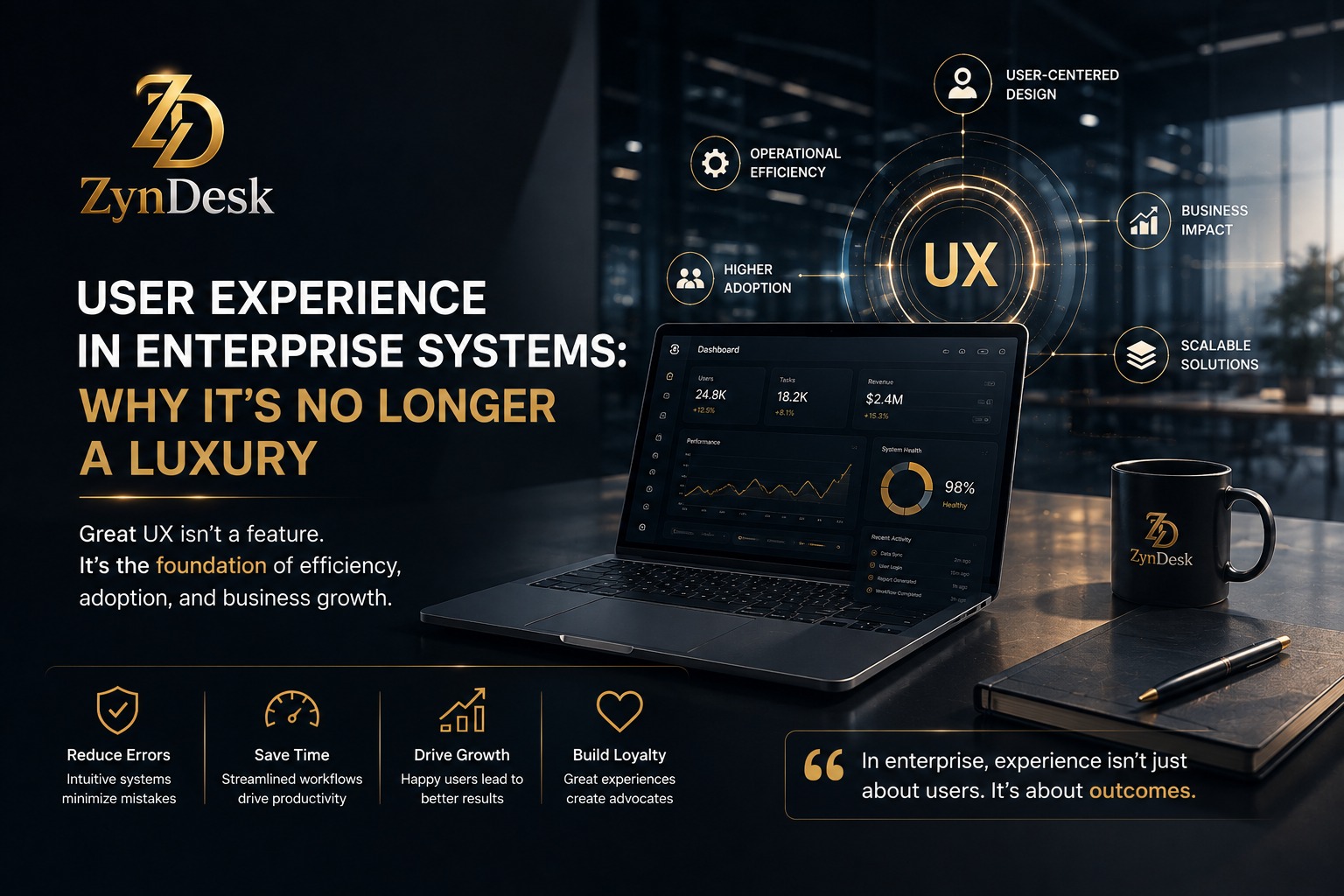
Some may think that discussing user experience in enterprise systems only relates to employee comfort, as if it falls under improving the work environment or increasing employee satisfaction. But the truth is quite different.
Every unnecessary click, every complex screen, and every extra step within the system gradually turns into a real cost borne by the organization. This cost may not appear directly in financial reports, but it seeps into productivity, data quality, decision-making speed, and even customer satisfaction.
For this reason, user experience is no longer an issue that concerns designers or developers alone — it has become an issue that concerns senior management as well.
A Single Minute Can Turn into Thousands of Hours
Imagine an employee who needs one extra minute to complete each operation within the system.
One minute may seem like a number not worth worrying about.
But what if this employee performs a hundred operations a day?
That's a hundred minutes lost every day.
Now imagine the organization has two hundred employees using the same system.
Suddenly, that single minute turns into thousands of wasted hours annually.
These hours aren't just lost time — they're salaries paid for waiting on screens, searching for buttons, re-entering data, and navigating between pages that could have been condensed into a smarter interface.
This is why, when an organization invests in improving user experience design, it isn't spending an extra budget — it's recovering time that was quietly being wasted.
A Confident Employee Works Faster
There's a big difference between an employee who enters the system knowing exactly what they'll do, and one who hesitates before every step, afraid of making a mistake.
Complex systems create this hesitation.
Systems built on thoughtful user experience, on the other hand, give employees a sense of confidence.
Confidence here isn't just a psychological feeling — it's reflected in daily performance.
A confident employee:
Completes tasks quickly.
Needs less help from the support team.
Makes fewer mistakes.
Learns to use new functions easily.
Accepts system updates without resistance.
In contrast, an employee who feels confused will spend part of their day asking, searching, or trying more than one way to reach the required result.
Human Errors Aren't Always the Fault of Humans
When errors recur within an organization, the usual reaction is to hold employees responsible.
But is the problem really with the employees?
In many cases, the real cause is the system's design.
Suppose a data-entry screen displays similar-looking fields, or the primary and secondary buttons are placed confusingly close together, or the system gives no warning before executing a sensitive action.
In such cases, the error becomes expected.
Successful organizations therefore don't just ask, "Who made the mistake?" — they ask, "Did the system's design help prevent the mistake?"
This perspective is what distinguishes organizations that learn from their mistakes from those that keep repeating them.
Good Data Starts with a Good Interface
Data today is among the most important assets of any organization. Reports, dashboards, analytics, and even management decisions all depend on the quality of the data entered.
But what happens when the system's interface is confusing?
The employee may select the wrong value.
Or leave a field blank.
Or enter information in the wrong place.
Over time, these small errors turn into inaccurate data, then into misleading reports, then into decisions that could cost the organization dearly.
Therefore, improving user experience doesn't just affect ease of use — it also affects the quality of the data the organization relies on to shape its future.
Training... When It Becomes Shorter and More Effective
How much time does an organization need to train a new employee on the system?
In some companies, it can take weeks.
Not because the work is complex, but because the system itself is complex.
Every extra hour of training means additional cost, delayed employee integration, and pressure on the teams responsible for support.
But when the system is clear and intuitive, the employee can discover many of its functions on their own.
This doesn't eliminate the importance of training, but it allows training to focus on understanding business processes instead of explaining where buttons are and how to navigate between pages.
Here the organization achieves a double win: reduced training costs and faster time for the employee to reach full productivity.
Resistance to Change Starts with the First Impression
It's natural for employees to feel anxious when a new system launches.
But this anxiety doesn't persist if the system is easy to use.
On the other hand, if the first experience is full of complexity, questions, and errors, resistance to change will increase.
Some will start comparing the new system to the old one.
Others will try to go back to Excel files.
Unofficial workarounds may emerge to avoid using the system.
And so, the project loses a large part of its value before it even begins.
For this reason, leading organizations pay close attention to what's known as the "first user impression," because it can determine the fate of the entire project.
Employee Experience Reflects on Customer Experience
It may seem that the customer doesn't see the organization's internal system, but in truth, they feel its results.
When an employee can access customer information within seconds, service becomes faster.
When data is accurate, errors in orders and invoices decrease.
When operations flow smoothly, the customer feels the organization is organized and professional.
In other words, the customer experience begins inside the organization, before it ever begins on a website or app interface.
This is why investing in user experience in enterprise systems is an indirect investment in customer satisfaction and loyalty.
From a Cost Center to a Competitive Advantage
For a long time, enterprise systems were treated as a necessary cost.
But the most successful organizations have changed this view.
They now see that a system designed around user needs can be a source of speed, accuracy, flexibility, and innovation.
When employees can complete their work efficiently, they have more time to think, develop, and serve customers, instead of wasting hours dealing with a system that drains their energy.
Here, user experience shifts from a technical detail into a competitive advantage that's difficult for competitors to replicate, because it's reflected in every process, every decision, and every interaction within the organization.
Why Do Some Enterprise Systems Fail Despite Their Technical Power?
There's a paradox that recurs in the business world more often than we might imagine.
An organization announces a massive investment in a new enterprise system, allocates a large budget for it, brings in a consulting team, and spends many months on implementation. After the system launches, management expects a new phase of efficiency and productivity to begin.
But what sometimes happens is the exact opposite.
Employee complaints increase, reliance on the system declines, some departments go back to using traditional spreadsheets or side applications, and everyone starts asking the same question:
"How did a system with these capabilities fail?"
The answer, in many cases, has nothing to do with the system's capabilities, but rather with how it was designed and the experience of using it.
When Technical Thinking Precedes Human Thinking
One of the common mistakes in developing enterprise systems is that the focus is placed entirely on functions and features, while the user is left to adapt to them.
Meetings begin by discussing the number of reports, integration mechanisms, permissions, databases, and the system's integration with other systems — all undoubtedly important elements.
But a simple question that should have been present from the start is missing: "How will the employee actually use all of this in their daily life?"
The system may be capable of executing hundreds of operations, but if the user needs dozens of steps to reach the simplest task, these capabilities turn from a strength into a source of frustration.
True success isn't measured by the number of features a system contains, but by how easily they can be accessed and benefited from.
More Features Isn't Always a Feature
Some organizations tend to believe that the best system is the one offering the largest number of features.
But reality proves that an abundance of options can become a burden if they aren't presented in an organized way.
Imagine entering a screen containing dozens of buttons, menus, fields, and shortcuts, while all you need to do is complete a single task.
Instead of feeling empowered, you'll feel scattered.
This is where the value of user experience design appears — not aimed at reducing the system's capabilities, but at organizing them according to the user's priorities, so they see what they need at the right moment, without visual noise or unnecessary complexity.
Complexity Creates Silent Resistance
Not all resistance to change is announced loudly.
In many cases, employees begin resisting the system silently.
They keep a copy of the data in Excel files.
They exchange information through chat apps instead of recording it in the system.
They rely on their personal experience more than on the software.
Over time, the system loses its standing as the primary source of information.
This type of resistance is more dangerous than outright rejection, because it happens without management noticing at first, yet it weakens data quality and reduces the expected return on the digital transformation project.
Signs That Tell You User Experience Is Struggling
It isn't necessary to wait for a project to fail to realize there's a problem. Systems often send clear signals, but no one pays attention to them.
Among the most notable signals:
Frequent technical support requests related to simple tasks.
Employees relying on colleagues to learn how to perform daily operations.
Rising task-completion times despite the system's power.
The spread of Excel files outside the system.
Declining use of certain important functions despite the need for them.
Recurring data-entry errors.
Repeated complaints about slow workflow, even though the real cause is interface complexity, not server performance.
When these indicators come together, the problem is usually not with the employees, but with the experience the system provides them.
A System's Success Doesn't Begin After Launch... It Begins Before It
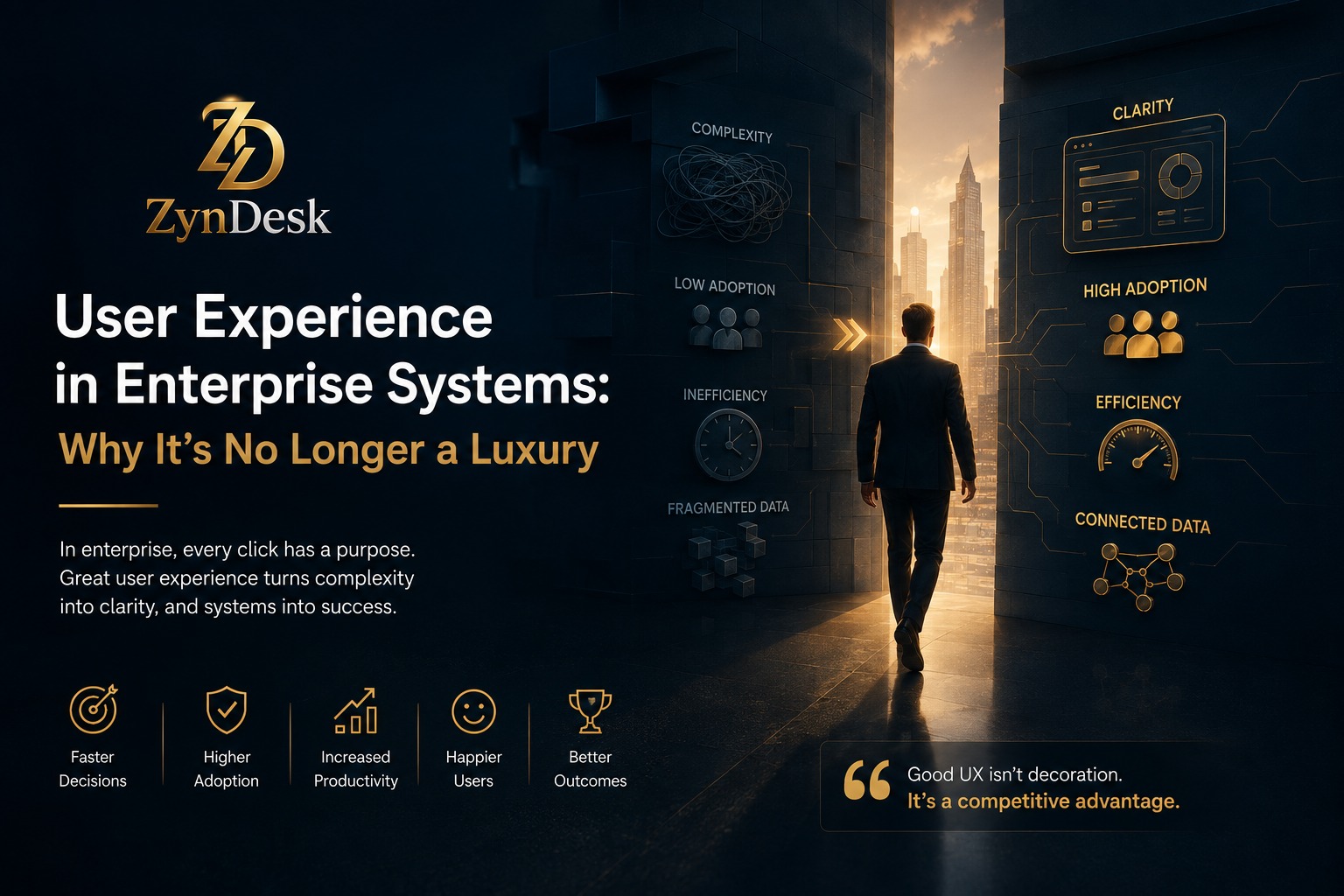
One of the biggest mistakes is viewing user experience as a cosmetic phase added at the end of a project.
In reality, it should begin from the very first requirements-analysis meeting.
Before writing a single line of code, one should understand the nature of users' work, the environment they operate in, the pressures they face, and the decisions they make daily.
A successful system doesn't force the user to change how they think — it adapts to their way of working and makes them more efficient.
This is why leading organizations now rely on user interviews, prototype testing, and user-journey analysis before moving on to the development and implementation phases.
Employees Don't Hate Technology... They Hate Complexity
It's easy to say employees resist change, but this explanation doesn't reflect the full truth.
In their personal lives, most people use banking apps, shopping platforms, and smart services, and deal with them easily and confidently.
So why do they reject certain systems at work?
The reason isn't the technology itself, but the experience.
Humans, by nature, look for the easiest, fastest, and clearest solution. When they find that a system saves their time and reduces their effort, they adopt it without needing much persuasion.
But if they feel that using it adds to the complexity of their day, they'll look for any alternative, even if it's technically less efficient.
The Real Investment Isn't in Software... It's in Those Who Use It
An organization may spend millions of pounds or dollars purchasing the latest software solutions, but it won't achieve the expected return if it doesn't invest just as much in user experience.
Every design decision, no matter how small it seems, is reflected in thousands of daily interactions within the organization.
A button in the wrong place, an unclear message, or an unnecessary extra step may repeat hundreds of times a day, gradually turning into a hidden cost that affects performance and productivity.
On the other hand, improving these small details makes a big difference in speed of completion, quality of work, and employee satisfaction.
This reveals a truth that leading organizations now believe in:
The best enterprise system isn't the most complex or the most feature-packed — it's the system that makes work easier, decisions faster, and people more able to focus on the value they deliver, instead of being preoccupied with how to use the tool itself.
We'll explore how artificial intelligence, smart personalization, and behavioral analysis will reshape user experience in enterprise systems, and why this experience will become one of the most important competitive factors among companies in the years ahead, with a strong conclusion and a call to action aligned with ZYNDESK's identity.
The Future of User Experience in Enterprise Systems... and Who Will Lead the Competition?
For many years, competition among enterprise system providers depended on the number of functions each system offered and its ability to manage various operations. The more features, the more powerful the system was considered.
But this concept is changing quickly.
Today, organizations no longer ask, "How many functions does the system offer?" Instead, they ask, "How many tasks can our employees complete easily, accurately, and in less time?"
This shift didn't come out of nowhere — it came from a growing realization that technology only achieves its true value when it's easy, smart, and close to the way humans think.
For this reason, the future of user experience in enterprise systems won't revolve around designing more beautiful interfaces, but around building systems that understand their users, learn from them, and help them make better decisions.
Artificial Intelligence Will Change How We Interact with Systems
Until recently, it was the user who had to search for information within the system.
Open several pages.
Apply a set of filters.
Navigate between reports.
And try to connect the numbers until reaching the needed answer.
Today, this model has begun to change.
Modern AI-powered systems have become capable of understanding context, suggesting appropriate actions, and surfacing important information before the user even asks for it.
Imagine a sales manager opening the system at the start of their day and finding a notification informing them that a key customer's engagement rate dropped over the past month, along with an analysis of the reasons behind the decline and practical suggestions for handling the situation.
Or an operations manager entering the dashboard and automatically seeing the operations that need urgent intervention, instead of searching for them among dozens of reports.
Here, the system stops being just a tool that displays data and becomes a partner that helps in decision-making.
Personalization... Because Every User Has a Different Journey
Not every employee needs to see the same information.
A sales manager has different priorities from an HR manager.
And an accountant deals with completely different data from a customer service representative.
For this reason, the future of user experience design depends on customizing the interface according to each user's role and actual needs.
Instead of a crowded screen showing everything to everyone, interfaces will become smarter, so each user sees only what they need, exactly when they need it.
This simplicity doesn't reduce the system's power — it increases it, because it makes accessing information faster and decision-making more efficient.
From Reaction to Anticipation
In the past, systems waited for the user to discover the problem.
In the future, systems will become more proactive.
They'll monitor patterns.
Analyze behavior.
Recognize early indicators.
Then alert the user before the problem turns into a crisis.
This shift will make organizations more capable of managing risk, improving performance, and seizing opportunities at the right time.
Speed in the business world no longer just means executing a decision quickly — it means discovering the need for a decision before others do.
Data Alone Isn't Enough
Many companies today take pride in owning huge amounts of data.
But the truth is that data creates no value if it isn't understood.
This is where user experience in enterprise systems plays a decisive role.
Successful dashboards aren't the ones displaying the largest number of charts, but the ones that help a manager understand the situation within seconds and direct their attention to what deserves follow-up.
The clearer the data, the faster the decisions.
And the simpler the interface, the greater the user's trust in the information they rely on.
Employee Experience Has Become Part of the Organization's Strategy
There's an important shift happening within global organizations.
After years of focusing on improving customer experience, management teams have begun to realize that the employee is the system's first customer.
If their daily experience is full of frustration, it's difficult for them to deliver an exceptional experience to customers.
But if they work with smart, easy-to-use tools, they can focus on creativity, problem-solving, and building better relationships with customers.
For this reason, employee experience has become a core element of digital transformation strategies, not just an initiative to improve the work environment.
The Organizations That Will Lead the Future
In the coming years, organizations won't succeed because they own the largest number of systems, but because they own the systems that best understand their users.
The leading organizations will be the ones that:
Put people at the heart of every technical decision.
Listen to users before developing any new feature.
Measure a system's success by its actual usage rate, not by its number of features.
Consider ease of use a long-term investment, not an added cost.
Employ artificial intelligence to simplify work, not complicate it.
These organizations won't just achieve higher productivity — they'll also succeed in attracting talent, reducing resistance to change, and accelerating innovation within their teams.
In the end, employees don't spend their day dealing with databases or programming code — they deal with interfaces, screens, and small decisions that repeat hundreds of times.
Every positive experience with the system gives them a sense of confidence, saves them precious minutes, reduces errors, and helps them focus on what adds real value to the organization.
Every bad user experience, on the other hand, drains time, energy, and motivation, even if the system is technically highly advanced.
For this reason, user experience in enterprise systems is no longer a luxury, nor a cosmetic feature added at the end of a project — it has become one of the most important success criteria for any digital transformation initiative, and one of the factors that determines organizations' ability to grow and compete in a fast-changing market.
At ZYNDESK, we believe that technology only achieves its true impact when it stays close to the human being who uses it every day. That's why we don't build enterprise solutions that focus only on functions and capabilities — we design user experiences that make systems simpler, smarter, and more capable of empowering employees and decision-makers to work efficiently and confidently.
The future won't belong to the organizations with the most complex software, but to the organizations that make technology feel simple, giving people more room for creativity, decision-making, and building success.